Certitude vs Possibilité
MUST > SHOULD > MAY > MIGHT
Échelle de certitude
Haute certitude :
He must be at home (90% sûr)
She must know the answer
She must know the answer
Moyenne certitude :
He should be at home (70% sûr)
She may know the answer (50% sûr)
She may know the answer (50% sûr)
Faible certitude :
He might be at home (30% sûr)
She could know the answer
She could know the answer
Obligation vs Permission
MUST = obligation personnelle
HAVE TO = obligation extérieure
MAY = permission formelle
CAN = permission informelle
Intensité de l'obligation
MUST = impératif
HAVE TO = nécessaire
SHOULD = recommandé
NEED TO = requis
Conseils & Astuces
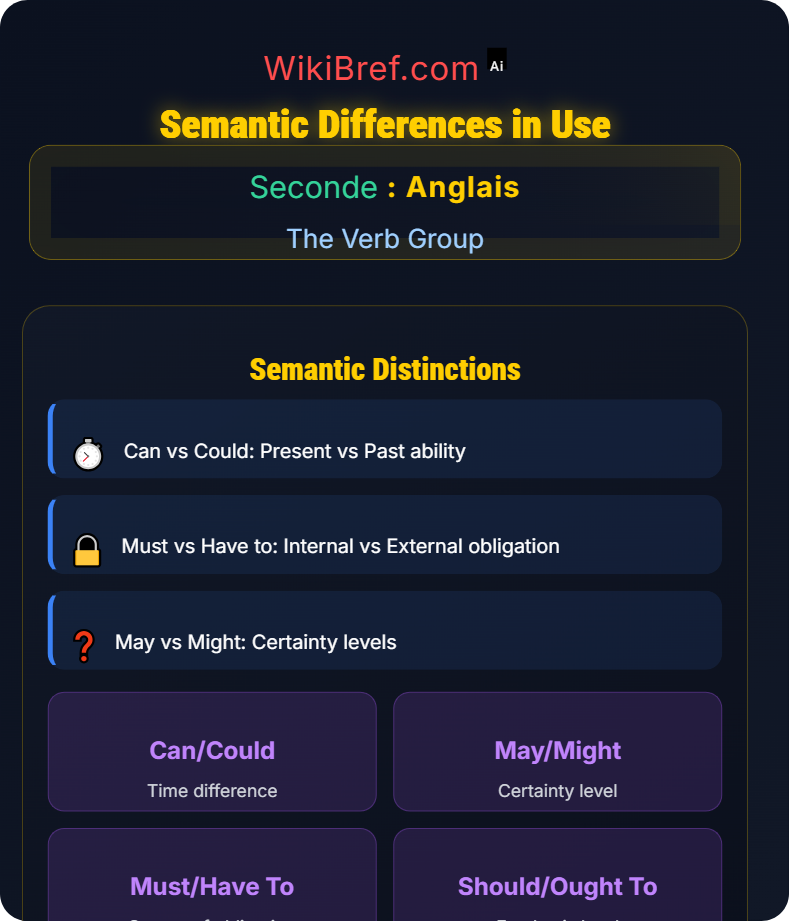
Must = obligation interne, Have to = externe
May > Might = plus probable
Could = politesse ou capacité passée
Should = bon conseil, Ought to = plus formel
Contexte détermine le choix du modal
Erreurs Fréquentes
Erreur 1 :
"He must know" pour "il pourrait savoir" (certitude vs possibilité)
Erreur 2 :
Confondre must (interne) et have to (externe)
Erreur 3 :
"He might to go" au lieu de "He might go"