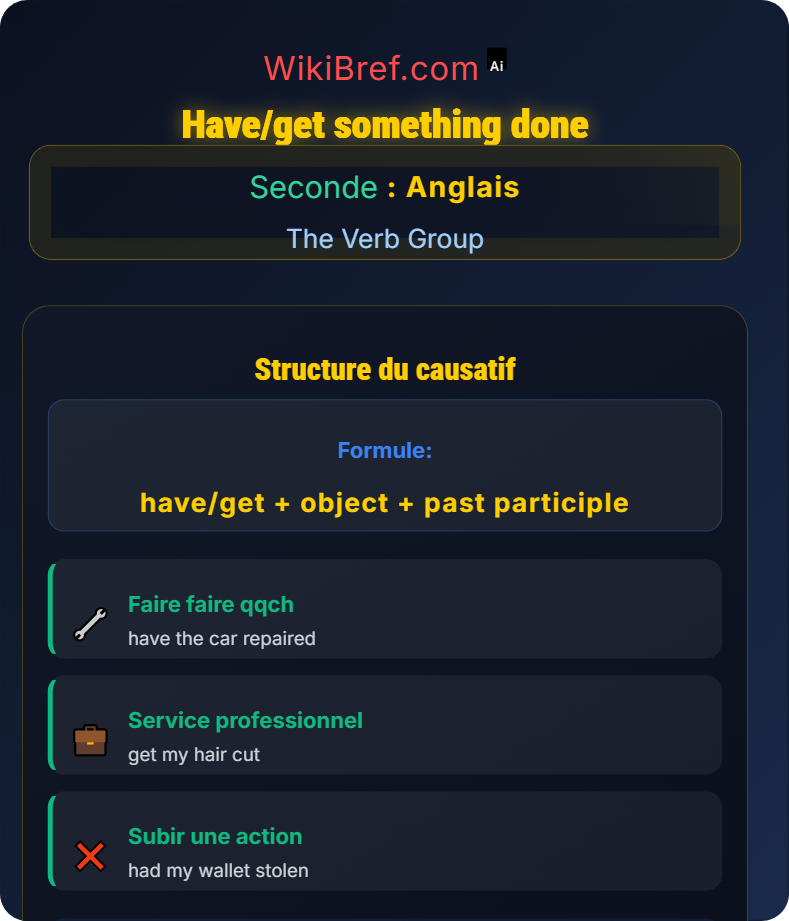
Définition et Concept
Expression causative:
HAVE/GET + OBJET + PAST PARTICIPLE
Faire faire quelque chose par quelqu'un d'autre
Faire faire quelque chose par quelqu'un d'autre
Structure:
Subject + have/get + object + past participle
I have my car repaired
She gets her hair cut
I have my car repaired
She gets her hair cut
Différence entre HAVE et GET
HAVE: plus formel, professionnel
GET: plus informel, quotidien
Exemples avec HAVE
Forme affirmative:
I have my house cleaned every week.
She had her computer fixed yesterday.
They will have their garden designed soon.
She had her computer fixed yesterday.
They will have their garden designed soon.
Forme négative:
I don't have my car serviced regularly.
She hasn't had her photos developed yet.
She hasn't had her photos developed yet.
Forme interrogative:
Have you had your passport renewed?
Did they have their house painted?
Did they have their house painted?
Exemples avec GET
Forme affirmative:
I get my hair cut once a month.
She got her phone repaired yesterday.
We'll get our photos printed tomorrow.
She got her phone repaired yesterday.
We'll get our photos printed tomorrow.
Forme négative:
I don't get my clothes ironed often.
He didn't get his bike fixed.
He didn't get his bike fixed.
Forme interrogative:
Did you get your room decorated?
Will she get her thesis proofread?
Will she get her thesis proofread?
Conseils & Astuces
Utilisez le participe passé (not infinif)
Faites la différence entre HAVE et GET
Pratiquez avec des situations quotidiennes
Mémorisez les verbes fréquents
Attention aux formes négatives et interrogatives