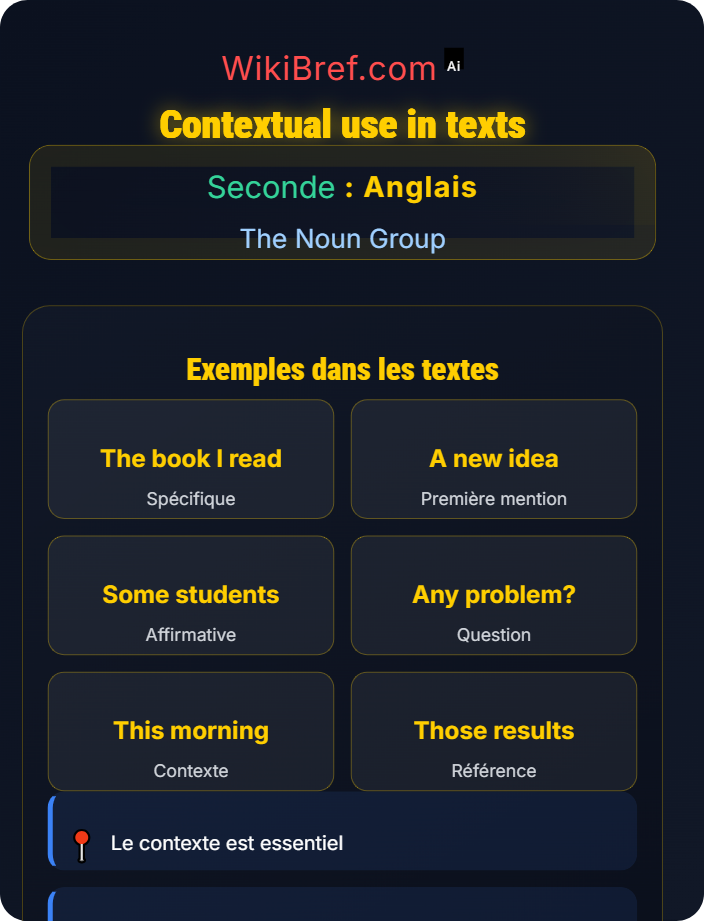
• Previously mentioned
• Known to both parties
• Unique items
• Use "the"
Sequential reference: First mention of a noun uses indefinite article "a/an"; subsequent mentions use definite article "the".
"I bought _____ book yesterday" - This is the first introduction of the book, so use "a book" (indefinite).
"_____ book was very interesting" - This refers back to the specific book mentioned earlier, so use "the book" (definite).
First mention: "a book" (unknown to the listener). Later mention: "the book" (known to both parties).
The sequence creates logical flow: introduction followed by reference to the same item.
The correct sentence is: "I bought a book yesterday. The book was very interesting."
• First mention rule: Use indefinite article "a/an" for first introduction
• Subsequent mention rule: Use definite article "the" for known references
• Coherence principle: Sequential references create textual cohesion
Unique items: Proper nouns and unique landmarks use "the" when referring to them specifically, even on first mention in some contexts.
"Eiffel Tower" is a proper noun referring to a unique, specific landmark.
Unique landmarks and proper nouns typically use "the" even on first mention.
"tower" refers back to the specific Eiffel Tower already mentioned, so use "the tower".
The Eiffel Tower is universally known, so "the" is appropriate for both speakers.
The correct sentence is: "The Eiffel Tower is in Paris. The tower attracts millions of tourists."
• Unique landmark rule: Use "the" with well-known unique places
• Proper noun exception: Some proper nouns require "the" even on first mention
• Shared knowledge: Universally known items use "the" regardless of context
Owner possession: When a noun is possessed by a specific person, the first mention may use "the" if the relationship is clear.
"John has _____ car" - This introduces a car belonging to John, so use "a car" (indefinite).
"_____ car is red and very fast" - This refers to the specific car belonging to John, so use "the car" (definite).
Even though the car belongs to John, the first mention is still indefinite until established.
The sequence follows the pattern: introduction (a) followed by reference (the).
The correct sentence is: "John has a car. The car is red and very fast."
• First mention rule: Use "a" for first introduction, even with possession
• Reference rule: Use "the" when referring back to established possession
• Sequence consistency: Maintain logical flow of introduction and reference
Plural indefinite reference: Use "the" with plural nouns when referring to a specific group previously mentioned.
The text appears to be discussing a specific group of students in a particular situation.
"_____ students arrived early" - If referring to a specific group known to both parties, use "the students".
"_____ students were waiting" - This refers back to the same group, so also use "the students".
Both sentences describe actions of the same specific group of students.
The correct sentence is: "The students arrived early. The students were waiting in the hall."
• Specific group rule: Use "the" with plural nouns for specific known groups
• Narrative consistency: Maintain the same reference throughout related sentences
• Shared knowledge: Both parties understand which students are being discussed
Superlatives and unique items: Use "the" with superlatives and globally unique items.
"highest peak" is a superlative expression, which always requires "the".
Superlatives use "the": "the highest", "the tallest", "the fastest".
"_____ peak is located in Nepal" - This refers back to Mount Everest, so use "the peak".
Mount Everest is the unique highest peak, making "the" appropriate for both references.
The correct sentence is: "Mount Everest is the highest peak. The peak is located in Nepal."
• Superlative rule: Superlatives always use "the"
• Unique item rule: Globally unique items use "the"
• Reference consistency: Subsequent mentions of the same item use "the"
Introduction and reference: First mention uses indefinite article; subsequent mentions use definite article.
"My neighbor has _____ cat" - This introduces a cat belonging to the neighbor, so use "a cat" (indefinite).
"_____ cat loves to sleep" - This refers to the specific cat mentioned earlier, so use "the cat" (definite).
First introduction: "a cat"; subsequent reference: "the cat".
The sequence creates logical connection between the two sentences.
The correct sentence is: "My neighbor has a cat. The cat loves to sleep on the roof."
• First mention rule: Use "a" for first introduction of a noun
• Subsequent reference rule: Use "the" when referring back to introduced noun
• Sequence logic: Introduction followed by reference creates textual cohesion
Shared context: When a specific item is understood by both parties in the immediate context, use "the".
The conversation is about a specific computer that both parties know about.
"_____ computer is broken" - This refers to a specific known computer, so use "the computer".
"Could you fix _____ computer" - This continues to refer to the same specific computer, so use "the computer".
The repair request is about the specific computer already mentioned.
The correct sentence is: "The computer is broken. Could you fix the computer for me?"
• Known item rule: Use "the" when referring to known specific items
• Immediate context: Both parties understand which item is being discussed
• Request consistency: Maintain the same reference throughout related requests
Location-based specificity: When a noun is defined by its location, use "the" even on first mention in that context.
"in our garden" specifies which tree is being discussed.
When a noun is made specific by context, use "the" even on first mention.
"_____ tree provides shade" - This continues to refer to the same specific tree, so use "the tree".
"Our garden" indicates shared knowledge about the specific tree.
The correct sentence is: "The tree in our garden is very old. The tree provides shade in summer."
• Location specificity: Use "the" when location makes noun specific
• Shared possession: "Our" indicates shared knowledge about the item
• Consistency rule: Maintain "the" for the same specific reference
Event-specific reference: In narrative contexts, the first mention may use "the" if the event defines the noun.
The text describes a specific event involving a particular plane.
"_____ plane landed safely" - This refers to the specific plane involved in the event, so use "the plane".
"_____ pilot was very experienced" - This refers to the pilot of the same specific plane, so use "the pilot".
Both sentences are part of the same narrative about the specific flight.
The correct sentence is: "The plane landed safely. The pilot was very experienced."
• Event specificity: Use "the" when event defines the specific noun
• Narrative consistency: Maintain specific references throughout related events
• Logical connection: Related elements in events use consistent specific references
Relationship-based specificity: When nouns are related through possession or connection, use "the" for both if the relationship is established.
"_____ house has a big garden" - This refers to a specific house known in context, so use "the house".
The house-garden relationship is established in the first sentence.
"_____ garden is full of flowers" - This refers to the specific garden belonging to the house, so use "the garden".
The garden is connected to the specific house, making both references specific.
The correct sentence is: "The house has a big garden. The garden is full of flowers."
• Relationship specificity: Use "the" when relationship makes nouns specific
• Connected references: Related items in possessive relationships use "the"
• Textual coherence: Maintain consistency across related elements